
The Fourth of July is approaching, and that means barbeques and fireworks! Many people love seeing the bright colors fly through the night air, but it is important to keep in mind that fireworks are explosives, and only professionals should handle them.
A study by the U.S. Consumer Product Safety Commission (CPSC) shows that more than 200 people, on average, go to the emergency room every day with fireworks-related injuries in July close to the Independence Day holiday. Follow these tips to prevent injury from fireworks:
For more information on fireworks safety, check out the CPSC Fireworks page.
|
Welcome to the Altus Emergency Management page. If you have questions, please feel free to visit http://www.ready.gov, call 800-BE-READY, or call the local emergency manager closest to you. If you are having a life-threatening emergency, call 911. If 911 fails, know the direct line to the Public Safety Answer Point that serves you. For non-emergent government and social service information call 211.
Wednesday, June 27, 2018
Stay Safe While Enjoying Fireworks #OKfire
Wednesday, June 13, 2018
Create a Pet Emergency Kit

National Pet Preparedness Month is in full swing and with summer heating up and hurricane season underway, there is no better time to learn how to keep your pets safe in the event of severe weather.
Prepare your pets now for hurricanes, extreme heat, and other hazards by creating a pet emergency kit.
Get started by following these tips from the Ready Campaign:
Your pets cannot prepare for an emergency, but you can. Find additional information for preparing your pets in the Pet Owners Fact Sheet.
|
Wednesday, June 6, 2018
Travel Safely this Summer
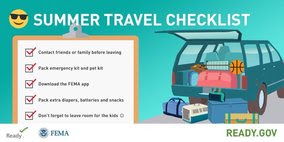
Are you ready for your summer vacation?
Whether planning a road trip or traveling abroad, stay prepared for emergencies with information from the Centers for Disease Control and Prevention (CDC), the Department of State, the National Highway Traffic Safety Administration (NHTSA), the Ready Campaign, and the Transportation Security Administration (TSA). Please consider the following tips:
To learn more about emergency preparedness, visit www.ready.gov.
|